
The Charging Conundrum
EV sales could slow if we don't speed up expansion of charging capacity.

Welcome to Issue 3 of Transport 3.0. We’re leading with a look at the elephant in the room related to electric vehicle market growth: charging capacity. Even though EV manufacturers are managing to wring more and more range from their vehicles, the need for more charging points is growing faster. If we don’t figure how to solve this capacity issue, we increase range anxiety among EV users and it will suppress the growth of EV sales.
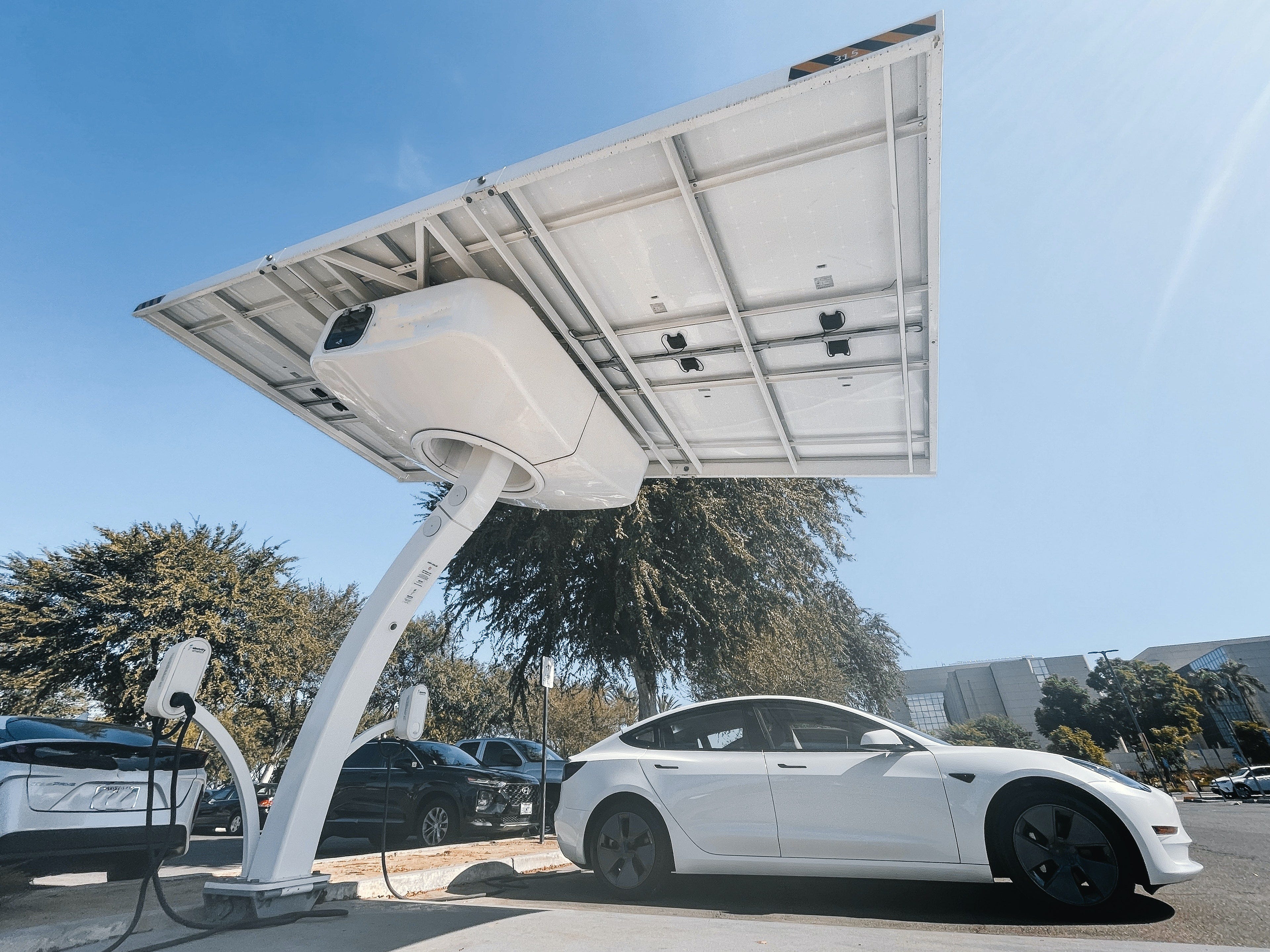
Photo by Kindel Media from Pexels
Here’s some suggested solutions:
Create more incentives for public and private entities to install charging stations - Most large organizations and corporations now have clear sustainability goals and need more clear evidence that they are taking actions to meet these goals. Installing charging stations in all corporate/government parking lots should be on the top of the list.
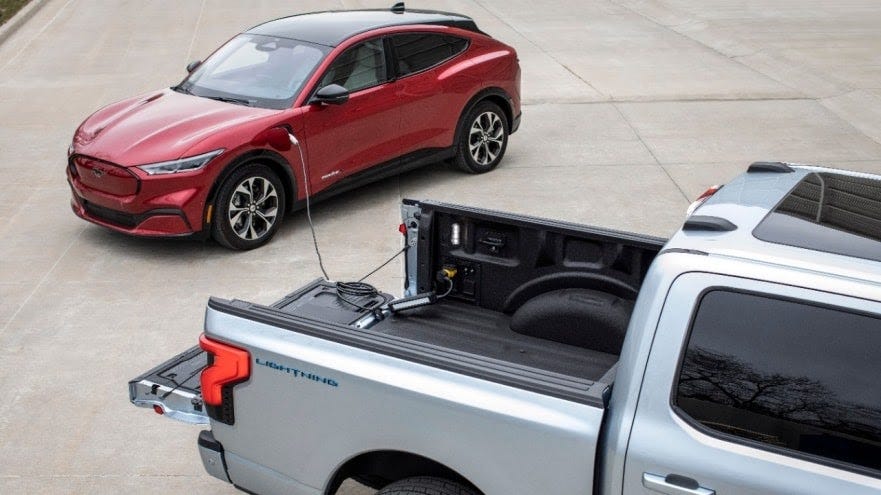
Push for more bidirectional charging systems on vehicles - Ford has been public about the bidirectional capabilities of its F150 Lightning pickup. And VW’s ID.4 can also share power from its batteries with another vehicle. We need a lot more of these. According to Trucks VC general partner and transport blogger Reilly Brennan, if every one of the estimated 1 million EVs on U.S. roads had a two-way battery, they would represent a charging network seven times larger than today's gas stations. If Ford produces 150,000 F-150 Lightning trucks a year as planned, those trucks alone would create more "distributed power stations" than all the gas stations in America, Brennan says.
Get more creative in funding charging station installations - Similar to the way many communities and regional power companies are creating solar gardens and community wind farms, why not create charging station co-ops where members all kick in dollars to build them and benefit from a reduced charging cost after they are installed. This would fill in a lot of the regional gaps where big charging station providers are not even looking right now. We need stations in rural areas to incentivize rural residents to buy EVs as well as provide city-based travelers with more options to recharge en route. Also need to avoid a similar black hole in rural areas as we still have with high-speed internet access.
Encourage investment is startups developing more efficient charging systems - We need more creative thinking around this. The biggest efficiency killer is charging time. That will be hard to change without major changes in battery technology. But we could get smarter about installations which allow more vehicle charging in smaller spaces. In-pavement contactless charging systems have promise because it allows use of thousands of existing parking spaces in corporate parking lots and public parking garages.
Briefly
Truck maker Navistar is planning to make AI collision-prevention software from Nauto available for trucks internationally. Nauto’s AI software tracks and calculates collision risk and alerts the driver of risk instantaneously. Nauto claims users can see between 50% and 80% drop in collisions within a few months of using.
The U.S. National Highway Traffic Safety Administration (NHTSA) will now allow the use of advanced headlights. These headlights have been allowed in Europe, Canada, and Japan for some time but hit a regulatory wall in the U.S. Toyota petitioned NHTSA in 2013 to allow the lights after developing an automated system to adjust the light beams automatically and reduce glare for oncoming traffic.
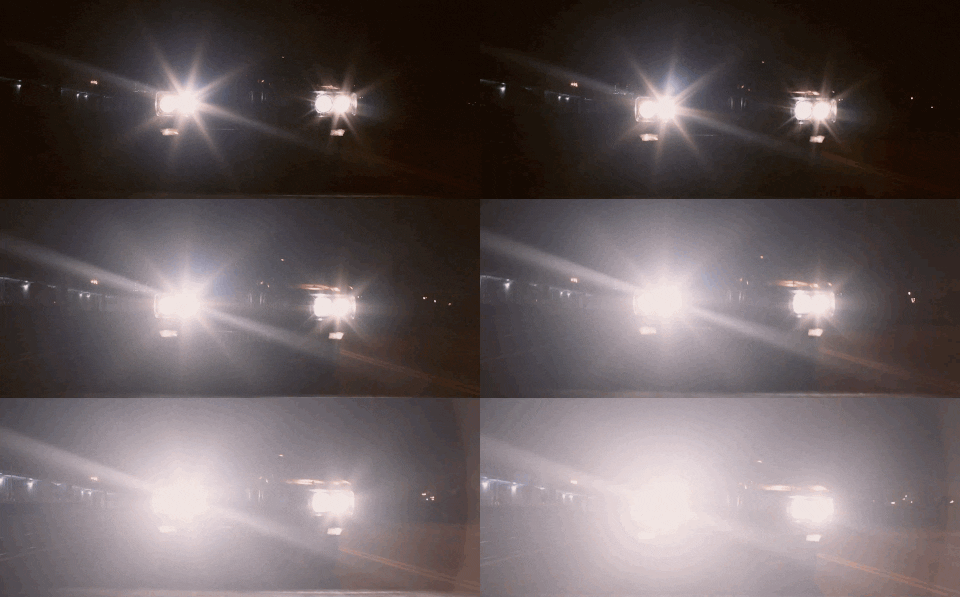
NHTSA relented in part because of the 45% increase in pedestrian deaths in the U.S. since 2010. According to Reuters, the ruling "will improve safety for pedestrians and bicyclists by making them more visible at night, and will help prevent crashes by better illuminating animals and objects in and along the road."
After six days of flames and frantic efforts to tow her back to port, vehicle carrier Felicity Ace finally sank off the coast of Portugal. The cause of the fire is still being investigated, but this fire is the eighth incident involving vehicle carrier ships since 2002. Other notable incidents include the Golden Ray capsized in 2019, losing over four thousand Kias and Hyundais, and the Hoegh Osaka, which tipped over onto its side in 2015 due to Land Rovers stacked too high on upper decks and too little ballast water in its hold. The Felicity Ace was carrying thousands of Volkswagens, Porsches, and Bentleys valued north of $150 million.
Rivian Automotive announced that supply chain constraints decreased their 2022 production forecast from 50,000 R1 and RCV model vehicles to 25,000, For the fourth quarter of 2021, the EV maker had $54 million in revenue with a negative gross profit of $383 million from selling 909 vehicles. Through March 8 of this year, Rivian has produced 1,410 vehicles. It also announced a new lithium iron phosphate battery (LFP) battery option which will be lower cost.
Deals
Freightpay, a Los Angeles-based payment platform for logistics and freight forwarders, raised $2 million in funding led by Defy.vc and Better Tomorrow Ventures and was joined by investors including BAM Ventures, Flexport, Socially Financed, project44 co-founder and CEO Jett McCandless, and Jason Duboe.
Israeli startup Autobrains has raised another $19 million, rounding out its Series C at $120 million. Investors included Temasek as well as previous strategic backers Continental and BMW i Ventures and new backers Knorr-Bremse AG and VinFast. Autobrains will use the fresh capital to keep developing a solution fixes the 1% margin of error typical in self-driving with a “self-learning” approach that is hardware-agnostic.
BMW has acquired the rights to the Alpina trademark. Based in the same German state of Bavaria as BMW, Alpina was founded in 1965 as a tuner of BMW cars, making it older than BMW’s own M division which turns 50 this year. The two companies have enjoyed a close relationship for decades, with BMW even directly selling Alpina models through its own dealerships in some markets, like the U.S., and that deal will continue in its existing form through 2025.
Subscribe below to Transport 3.0 to get the next issue in your inbox and stay on top of fast-changing news and trends in transport.
If you have a new transport-focused tech product or service to talk about or other news to share, contact us at transport30@dekenmedia.com